 Recycling and Sustainability for Gardeners Camden
Gardeners Camden champions an eco-friendly waste disposal area and a thriving sustainable rubbish gardening area across the borough. Our approach balances practical collection, local reuse and composting initiatives, and a clear target-driven plan so that green spaces and private gardens contribute to Camden's circular economy. This page explains how we manage garden waste, partner with local organisations, and operate a low-carbon collection fleet to reduce emissions and landfill.
Local approach to eco-friendly waste disposal
Camden's neighbourhoods are served by a combination of curbside garden waste collections and designated drop-off points. We support the borough's wider waste separation framework—encouraging residents to separate food waste, paper, glass and mixed recycling from garden and woody material—to make our eco gardening refuse streams cleaner and easier to process. Reducing contamination in recycling bins is essential: clean, dry cardboard and uncontaminated green waste improve the quality of compost and secondary materials.
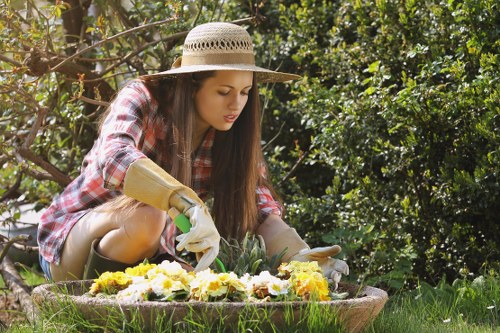 Our sustainable rubbish gardening areas are designed to be community-friendly: shared compost bays, mulching stations and clear signage that explain acceptable materials, such as leaves, grass cuttings, prunings and untreated wood. We promote small-scale on-site composting at allotments and communal gardens, alongside borough-operated hubs that accept larger loads.
Gardeners Camden coordinates with local transfer stations to ensure green waste is processed responsibly. Materials collected from kerbside rounds and community drop-offs are taken to designated transfer facilities in and around Camden where they are bulked, screened and forwarded to authorised composting contractors. These nearby transfer stations reduce haul distances and enable quicker turnaround into usable soil conditioners and mulch.
 Camden's borough-wide waste separation policy means that gardeners and residents play a direct role: bagged garden waste should be free of food scraps and contaminants, glass is placed in separate containers, and small volumes of treated wood are directed to specialist recyclers. We encourage the use of clear-lidded garden sacks and labelled containers at community sites to improve sorting efficiency and reduce contamination.
Key recycling and reuse activities supported by Gardeners Camden include:
- Community composting — turning green waste into high-quality compost used by local gardens and parks.
- Mulch redistribution — supplying woodchip and bark mulch from collected brush to tree teams and community plots.
- Material exchange — facilitating reuse of pots, soil improvers and tools through local swap events and charity partnerships.
 Partnerships and local charity collaborations
We work with a network of charities, social enterprises and volunteer groups to extend the life of garden materials and support community projects. Partnerships focus on reuse and training: intact pots and seed trays are cleaned and redistributed, surplus soil improvers are offered to allotment associations, and larger wooden pallets and untreated timber are diverted to repair and upcycling schemes. These collaborations provide social value as well as environmental benefit, while keeping useful materials out of the waste stream.
Our relationships with local charities prioritise clear transfer pathways for gently used items and surplus organic matter. Typical activities include community-led compost hubs hosted by green charities, tool libraries that accept donated equipment, and volunteer-led collection drives for larger garden clearances. By aligning collections with charity pick-ups and reuse schedules we reduce double-handling and lower overall emissions from repeated trips.
 To support low-emission logistics we operate a fleet of low-carbon vans for local collections and community drop-offs. The fleet includes fully electric vans for short urban runs and hybrid vehicles for longer journeys to transfer stations. Using electric vehicles for frequent, short-distance garden waste pickups significantly lowers local air pollution and noise, while careful route planning and load consolidation further reduce fuel use and carbon output.
Gardeners Camden has set a clear recycling percentage target to measure progress and encourage continuous improvement. Our aim is to achieve a 70% recycling and reuse rate for garden-origin materials by 2030, with interim milestones of 60% by 2026. Targets are monitored through tonnage reports from collection rounds, transfer station receipts and partner charity logs, ensuring transparency and accountability across the supply chain.
Meeting these targets depends on ongoing community engagement and practical infrastructure: more communal compost bays, improved labelling at recycling points, and expanded access to low-carbon collection options. We also support pilot schemes for on-site processing at larger estates and housing co-operatives to reduce transport needs and return compost to local soils quickly.
The sustainable rubbish gardening area that Gardeners Camden promotes is not just about diverting waste—it's about creating resources. Cleanly separated green waste becomes compost and mulch that nourish urban soils, reduce the need for chemical fertilizers, and increase the resilience of street trees and local wildlife habitats. Every bag diverted from landfill is a step toward healthier soils, lower emissions and stronger community green space.

